Kalimantan Rattan: From Climbing Palm to Woven Form
Rattan is a diverse forest material, not a single visual style. Learn what its Kalimantan context means and what a buyer should confirm in a product listing.
Article body
Rattan is often recognised only after it has been bent, split, or woven into a basket or chair. In the forest it is a climbing palm, and the name covers many species with different dimensions and uses. That biological and material diversity is one reason a simple label such as “natural rattan” cannot tell a buyer everything they need to know.
A material with a long Kalimantan context
FAO research on East Kalimantan describes rattan as an important non-timber forest product used in traditional life and commercial trade. The same research notes longstanding exploitation and early records of rattan gardens. Another FAO account describes knowledge around collecting and cultivating rattan as something traditionally passed between generations.
Those records provide regional context, not automatic proof of sustainability for a modern product. A seller must still document where material came from, which species or grade was used when known, and whether any certification claim is valid.
How raw cane becomes an object
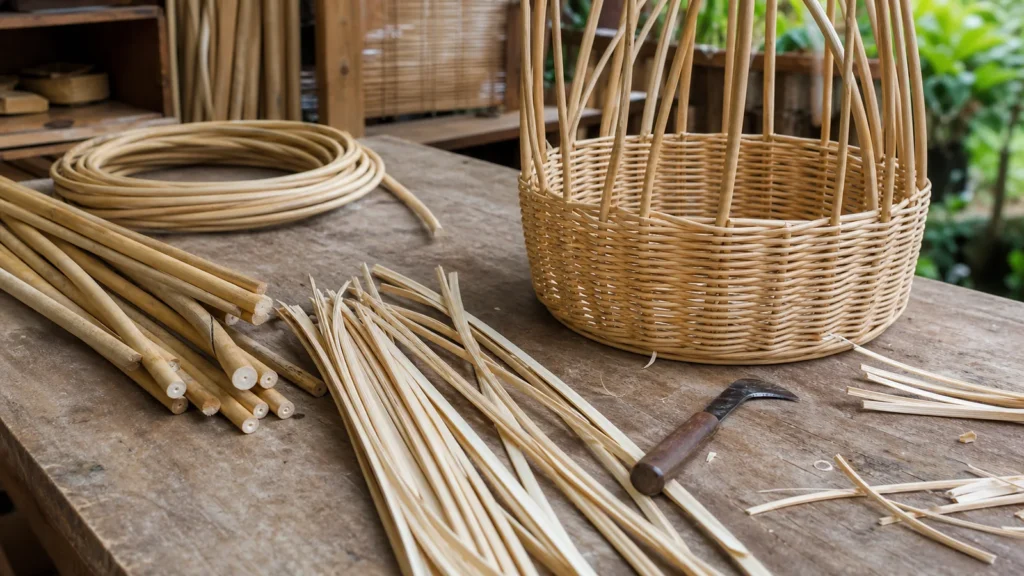
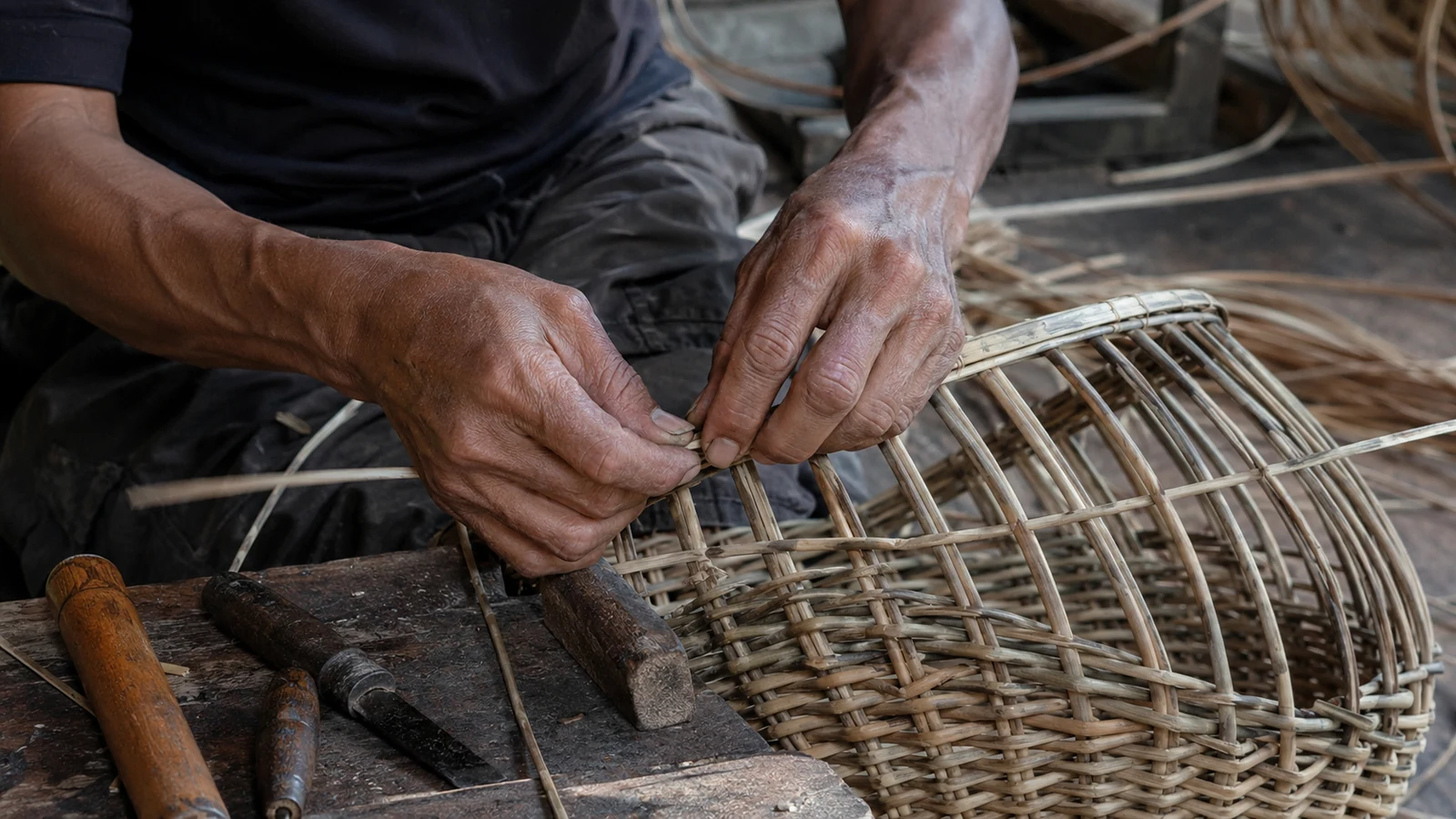
Depending on the product, rattan may be cleaned, dried, straightened, bent, peeled, split, sanded, woven, and finished. A structural frame and a fine woven skin may use different parts or grades. Surface colour can come from the cane itself, heat, stain, paint, or a protective finish.
Questions for a product page
- Material: solid cane, split rattan, synthetic weave, or a combination.
- Construction: frame material, joint method, weave pattern, and replaceable parts.
- Finish: natural, stained, painted, or sealed, with suitable care guidance.
- Use: indoor or outdoor suitability, maximum load when tested, and moisture exposure.
- Origin claims: city, province, material source, or certification only when verified.
Good rattan photography shows the weave, joints, underside, and scale. Good copy names what is known and leaves out what is not. Together, they let the material feel distinctive without turning regional history into a marketing shortcut.
Sources and Editorial Context
These references are provided so readers can review the source context behind the story. Indovia summaries and commentary should remain original editorial work, not copied or republished from external articles.
Food and Agriculture Organization of the United Nations
FAO sources support rattan as a diverse non-timber forest product, its East Kalimantan context, long use, and transmitted cultivation knowledge. Current product and sustainability claims are deliberately excluded without seller evidence.