NTT Ikat: Pattern, Place, and the Hands Behind the Cloth
How resist-dyed threads become woven pattern, why regional context matters, and what to verify when buying ikat from East Nusa Tenggara.
Article body
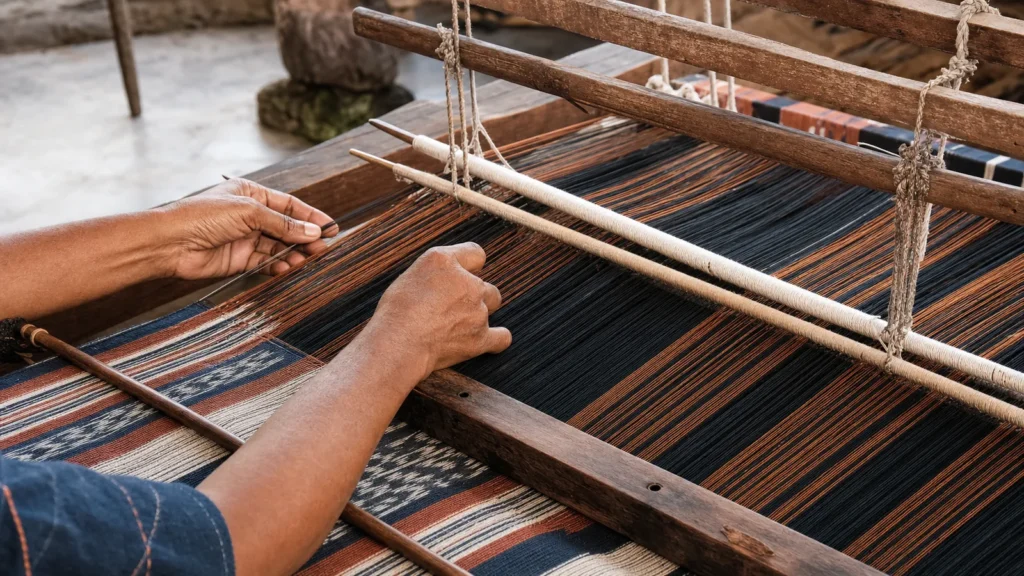
At first glance, an ikat textile may be read as colour and pattern. Its structure tells a deeper story. The design begins before the cloth exists: selected groups of threads are bound so they resist dye, then opened, realigned, and woven. The final pattern depends on decisions made across many stages rather than being added to the surface at the end.
A pattern prepared in the thread
Indonesia’s Directorate of Cultural Heritage describes ikat through the binding of warp, weft, or both sets of threads before dyeing. The tied sections resist colour. When the threads are placed on the loom, those planned intervals meet to form the motif. Slight feathering at the edges can reveal the relationship between dyed thread and woven structure.
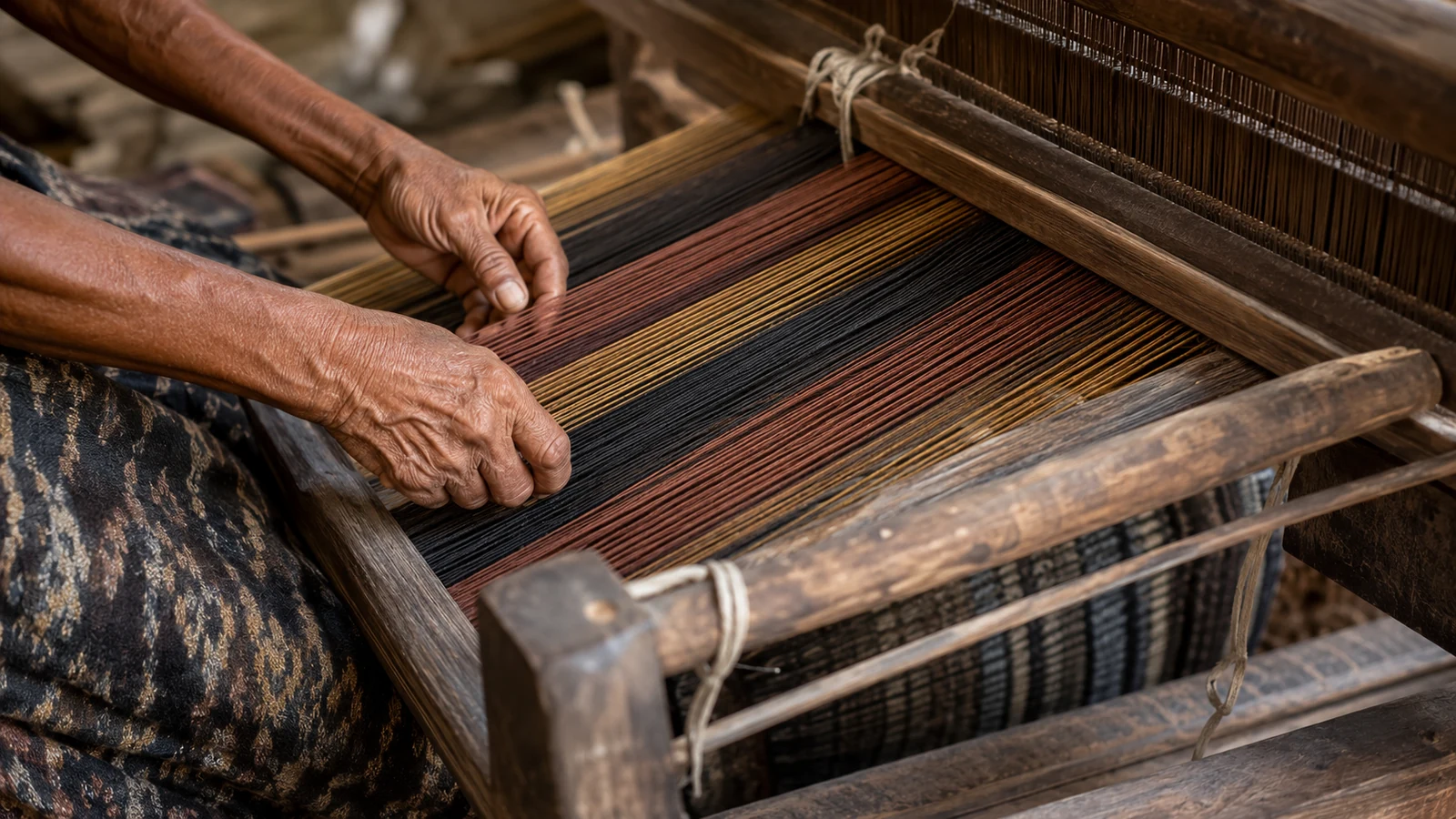
In East Nusa Tenggara, weaving traditions vary by island and community. A label that says only “NTT ikat” is therefore incomplete. Sumba, Flores, Timor, Rote, Sabu, and other places have distinct practices and visual languages. The maker’s region is useful product information, not a decorative detail.
What UNESCO’s record does and does not say
UNESCO’s 2013 committee record on Tenun Ikat Sumba notes cotton textiles made by women weavers, resist-dyed patterns, cultural values, and traditional transmission. The committee did not inscribe the nomination on the urgent-safeguarding list and asked for stronger community participation and clearer evidence. That distinction matters: the record is a useful source, but it should never be rewritten as a UNESCO certification for a shop or product.
Questions that improve a product listing
- Where was it made? Ask for island, regency, village, or workshop when the maker can provide it.
- Which threads were bound? Warp, weft, and double ikat describe different structures.
- What fibre and dye were used? Natural dye should appear only when the seller has verified it.
- Who made it? Name the individual or collective only with consent and accurate attribution.
- How should it be used and cared for? Confirm dimensions, colour variation, washing guidance, and whether the cloth has a specific ceremonial context.
For an international buyer, good ikat copy connects the visible textile to verifiable place, process, and maker information. It does not turn a living tradition into a generic exotic pattern.
Sources and Editorial Context
These references are provided so readers can review the source context behind the story. Indovia summaries and commentary should remain original editorial work, not copied or republished from external articles.
Directorate of Cultural Heritage and Cultural Diplomacy, Republic of Indonesia
The ministry source supports the resist-dye process and ikat structure. UNESCO supports the Sumba weaving context and records the committee decision not to inscribe the nomination. The article preserves that distinction.