Batik Parang: Reading a Classical Motif with Context
A closer look at batik as a wax-resist tradition, the diagonal rhythm of Parang motifs, and the questions buyers can ask before choosing a textile.
Article body
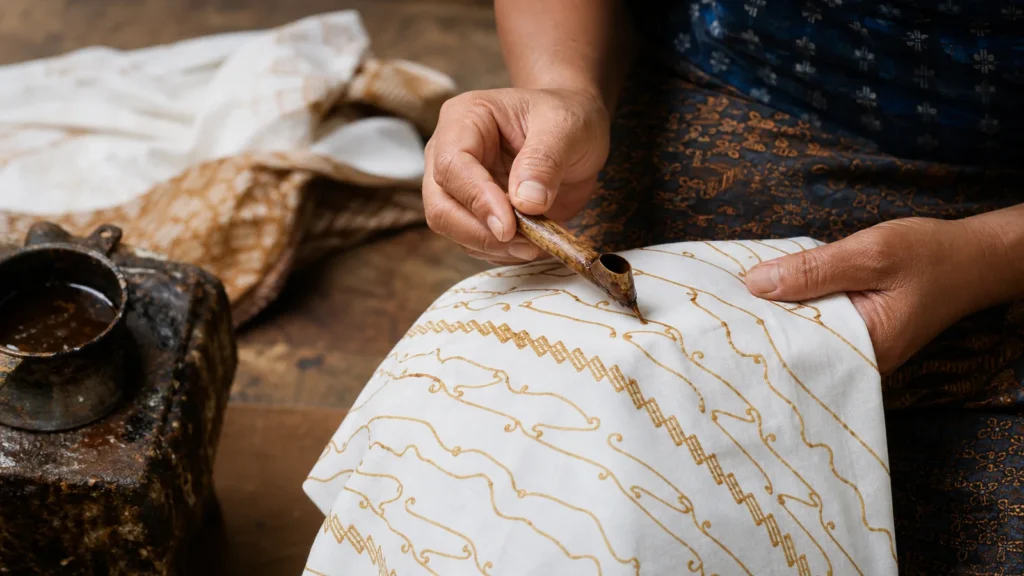
Batik is not simply a pattern printed on cloth. It is a textile tradition built around wax-resist dyeing, patient repetition, and a visual language that changes across places, workshops, and occasions. The diagonal movement of Parang is among the most recognisable classical forms, but recognising the motif is only the beginning of understanding it.
Begin with the process
UNESCO describes Indonesian batik through the techniques, symbolism, and culture surrounding hand-dyed cotton and silk. In a wax-resist process, a maker applies hot wax in dots and lines, dyes the cloth, removes the wax, and may repeat the sequence to build additional colours. The result records both planning and handwork: small shifts in line, wax, and dye can remain visible in the finished textile.
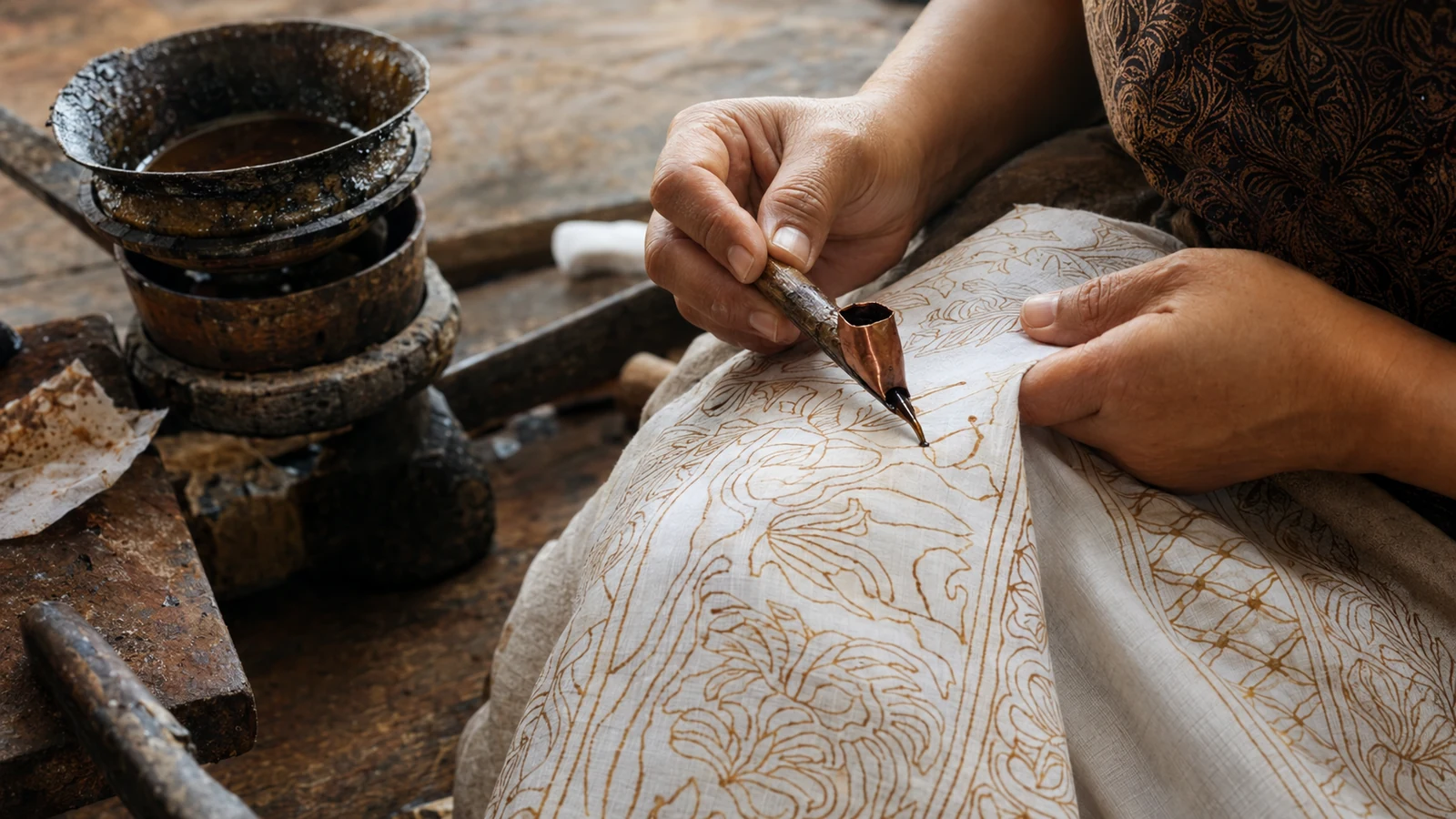
That process matters when reading a listing. A hand-drawn batik tulis, stamped batik cap, and a printed textile can all look attractive, but they are different products. A careful seller should identify the method rather than asking the buyer to infer it from photographs.
Parang is a family, not one universal message
Indonesia’s cultural inventory for Yogyakarta records Parang within the group of classical court motifs and describes it alongside other established motif families. Its strong diagonal arrangement is easy to recognise, yet Parang has multiple variants and contexts. Meanings can be shaped by the specific design, the community, and how the cloth is used.
Short commercial descriptions often reduce Parang to a single word such as strength or resilience. That may be part of a seller’s own interpretation, but it should not be presented as the only meaning for every Parang cloth. Respectful product copy distinguishes verified maker context from a broad cultural claim.
What an international buyer can look for
- Technique: ask whether the textile is hand drawn, stamped, printed, or combines methods.
- Material: confirm the fibre, dimensions, lining, and care instructions.
- Origin: look for the seller’s city or region and, when available, the workshop behind the piece.
- Motif detail: ask for the specific Parang variant and the seller’s source for its meaning.
- Photographs: review the reverse, edges, and close details, not only a styled front view.
A good listing does not need grand claims. Clear technique, honest material information, and a careful account of origin give the textile room to speak for itself.
Sources and Editorial Context
These references are provided so readers can review the source context behind the story. Indovia summaries and commentary should remain original editorial work, not copied or republished from external articles.
UNESCO Intangible Cultural Heritage
UNESCO supports the wax-resist process, cultural role, and inscription context. The Indonesian cultural inventory supports the Yogyakarta court-motif classification. The article avoids treating one commercial interpretation as the universal meaning of every Parang variant.