Jepara Woodcarving: A Living Craft Beyond Decoration
Why Jepara carving is best understood through process, skill, and place—and how furniture listings can tell that story without overclaiming.
Article body
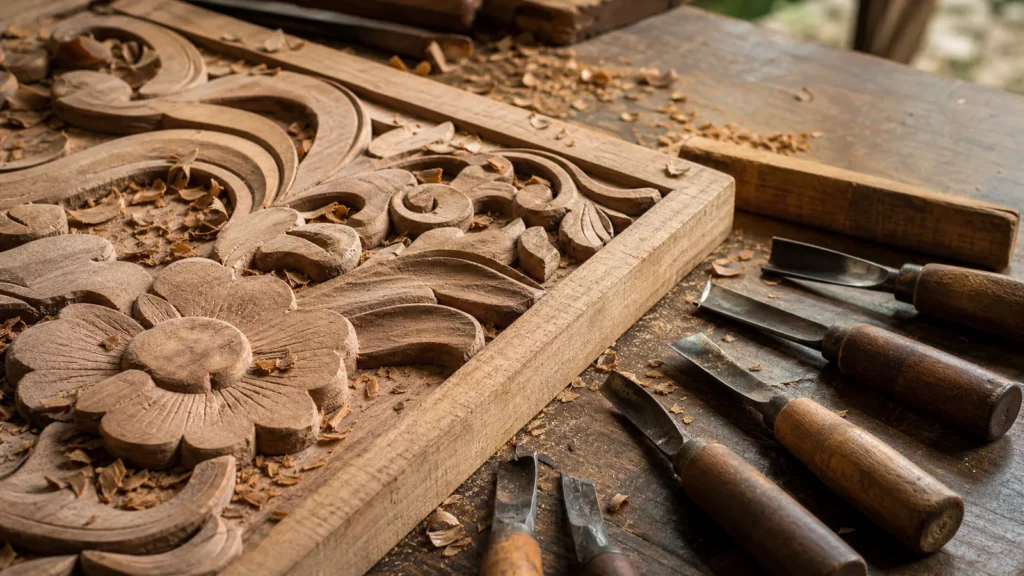
Jepara is widely associated with carved furniture, but a finished ornament shows only the last visible layer of the work. Behind it is an ecosystem of drawing, material selection, tool control, finishing, workshop knowledge, and skills passed between generations.
Carving as practice and knowledge
In 2026, the Government of Jepara described the TATAH exhibition as a research-based presentation of the region’s long carving history. Its curatorial framing treats carving not only as a product, but as knowledge, cultural process, visual language, and a living social practice. That is a useful way to read furniture too: the object matters, and so does the way it was conceived and made.
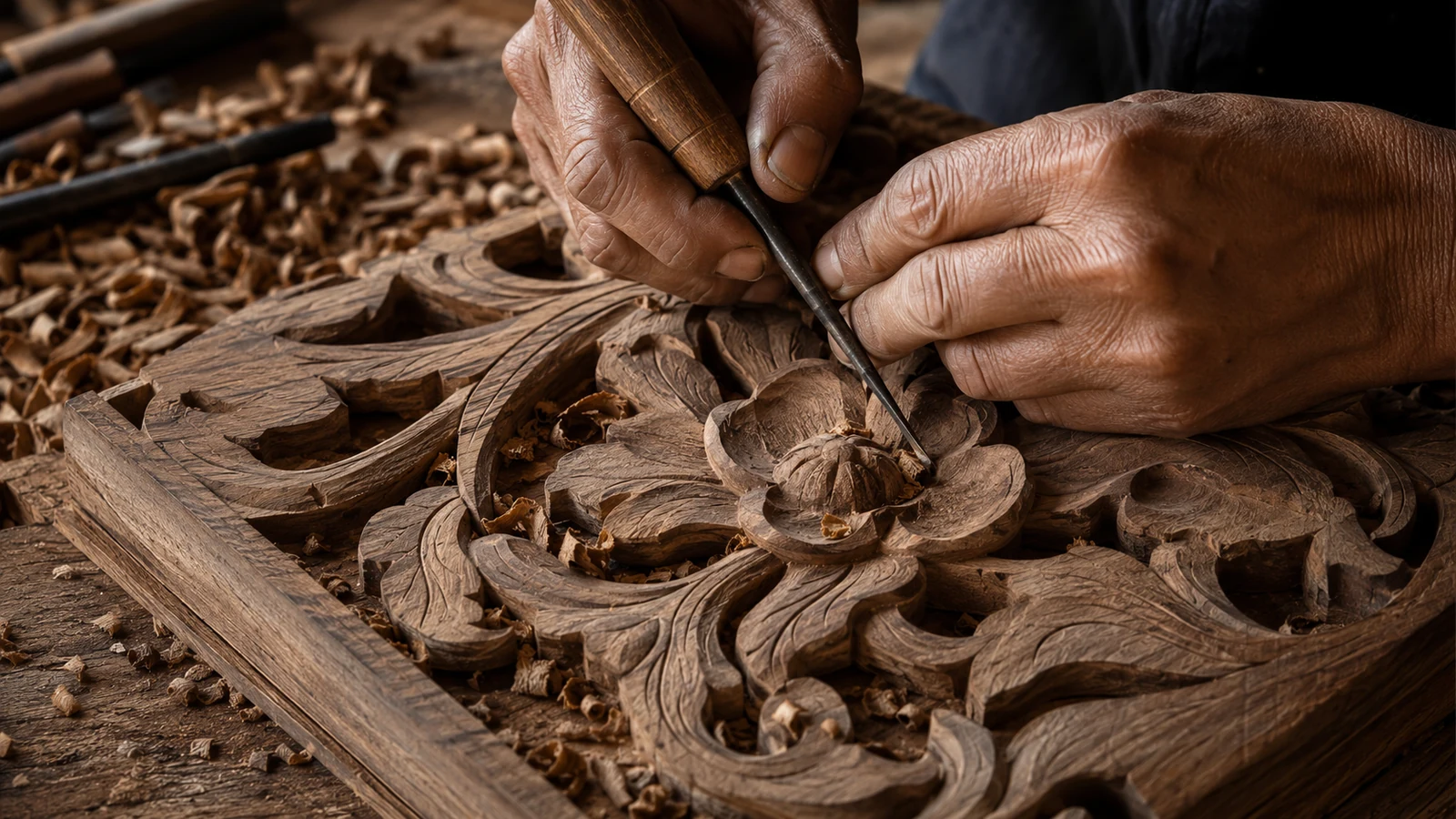
Jepara’s coastal history has also brought different cultural influences into contact. The official exhibition account notes that this meeting helped shape the distinct character of Jepara carving. A single product description cannot carry that whole history, but it can locate a verified maker within it.
What good furniture copy should verify
- Workshop origin: say Jepara only when the seller or maker has verified that connection.
- Material: name the wood species, component construction, and finish only when documented.
- Process: distinguish hand carving, machine carving, routing, casting, and applied ornament.
- Variation: explain natural grain or maker variation where it genuinely applies.
- Use: provide dimensions, weight, assembly, care, and indoor or outdoor suitability.
Story and specification belong together
A buyer may be drawn to the rhythm of a carved panel, the warmth of timber, or the balance of a chair. The story should deepen that attention, not replace practical facts. It is better to say “carved in a Jepara workshop, according to the seller” than to use unverified phrases such as heritage-certified, antique, sustainable, or master-carved.
For Indovia listings, origin is a data field as well as a narrative. When city, province, workshop, material, and process are verified, the product can carry both a clear specification and an honest sense of place.
Sources and Editorial Context
These references are provided so readers can review the source context behind the story. Indovia summaries and commentary should remain original editorial work, not copied or republished from external articles.
Government of Jepara Regency
Jepara government reporting supports the description of carving as a long-lived ecosystem of skill, knowledge, culture, material, and process. The article converts that context into a verification-first buyer guide.