Sambal Nusantara: How Regional Ingredients Shape Indonesian Flavor
Sambal is not one fixed recipe. Learn how ingredients, texture, cooking method, and serving context create distinct regional expressions across Indonesia.
Article body
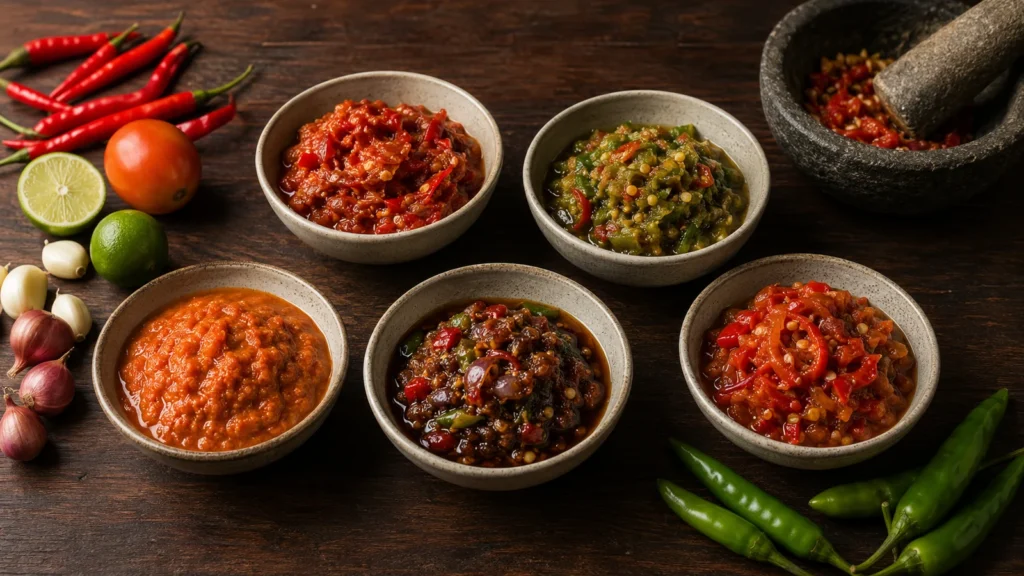
Sambal is often translated simply as chilli sauce, but that description hides much of its character. Across Indonesia, sambal can be raw or cooked, smooth or coarse, bright with citrus, deepened with shrimp paste, softened with tomato, or built around ingredients that reflect a particular place and meal. The useful question is not “Which sambal is the authentic one?” but “What ingredients, method, and serving context define this sambal?”
Diversity begins with ingredients and technique
A study published in the Journal of Ethnic Foods documents the breadth of Indonesian sambal and shows why it should be understood as a diverse food tradition rather than a single standard recipe. Chillies may provide the heat, but aroma, acidity, saltiness, sweetness, fermentation, roasting, and fresh herbs can change the result completely.
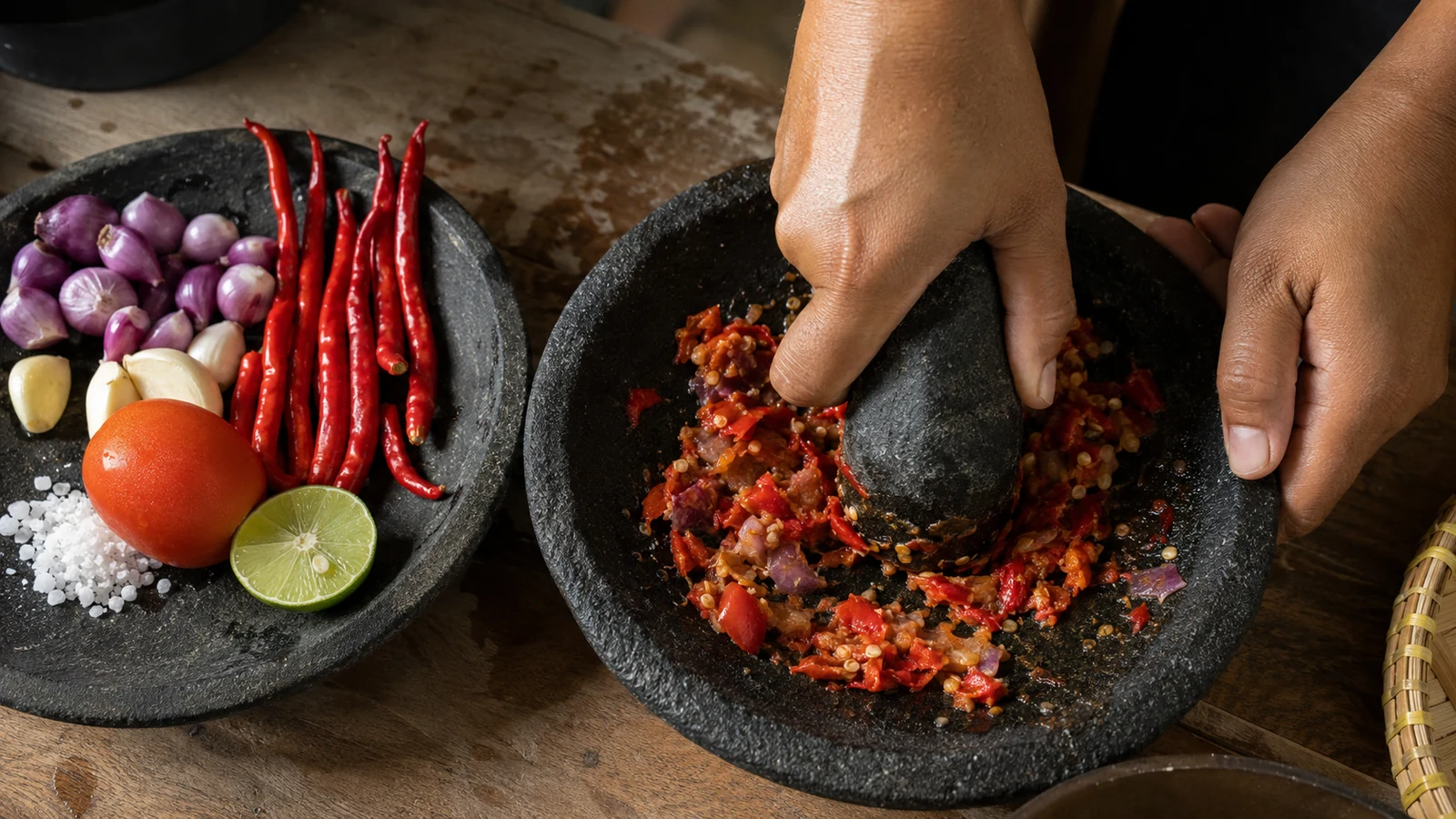
Preparation matters as much as the ingredient list. Grinding with a stone mortar creates a different texture from mechanical blending. Frying can soften raw sharpness and concentrate aroma. Some sambal is made just before serving, while other forms are cooked for longer storage. A product description should state the method instead of relying only on words such as traditional or homemade.
Regional names need careful explanation
A regional name can help a buyer understand culinary context, but it should not be treated as automatic proof of origin. Recipes move between households, restaurants, and producers. The same name may also appear in more than one variation. Respectful editorial copy explains the visible ingredients and known preparation method, then separates documented producer origin from broader regional inspiration.
What buyers should verify
- Ingredient order: identify the main chilli, aromatics, seasoning, sweetener, oil, and any seafood-derived ingredient.
- Allergens: confirm shrimp paste, fish, soy, peanuts, or other regulated allergens where relevant.
- Heat description: use a practical scale or tasting note rather than an unsupported claim.
- Processing: state whether the sambal is raw, cooked, fermented, shelf-stable, chilled, or frozen.
- Packaging: check net weight, seal integrity, storage instructions, and use-after-opening guidance.
- Origin: distinguish where the product is made from the region or recipe that inspired it.
A better way to tell the story
Strong sambal storytelling starts with sensory facts: the colour visible in the jar, the texture on the spoon, the ingredients named on the label, and the dishes the producer recommends. Cultural context can add meaning, but it should not replace food-safety information or product documentation.
Buyers exploring Indonesian food can browse the Food & Beverage category, compare products through the Indovia marketplace, and review purchasing support in the Buyer Help Center. The best listing lets flavour feel distinctive while keeping ingredients, processing, and origin clear.
Sources and Editorial Context
These references are provided so readers can review the source context behind the story. Indovia summaries and commentary should remain original editorial work, not copied or republished from external articles.
Journal of Ethnic Foods / Springer Nature
The source supports sambal as a diverse Indonesian food tradition shaped by ingredients, preparation, and regional context. Product safety, allergen, packaging, and origin checks are Indovia buyer guidance.